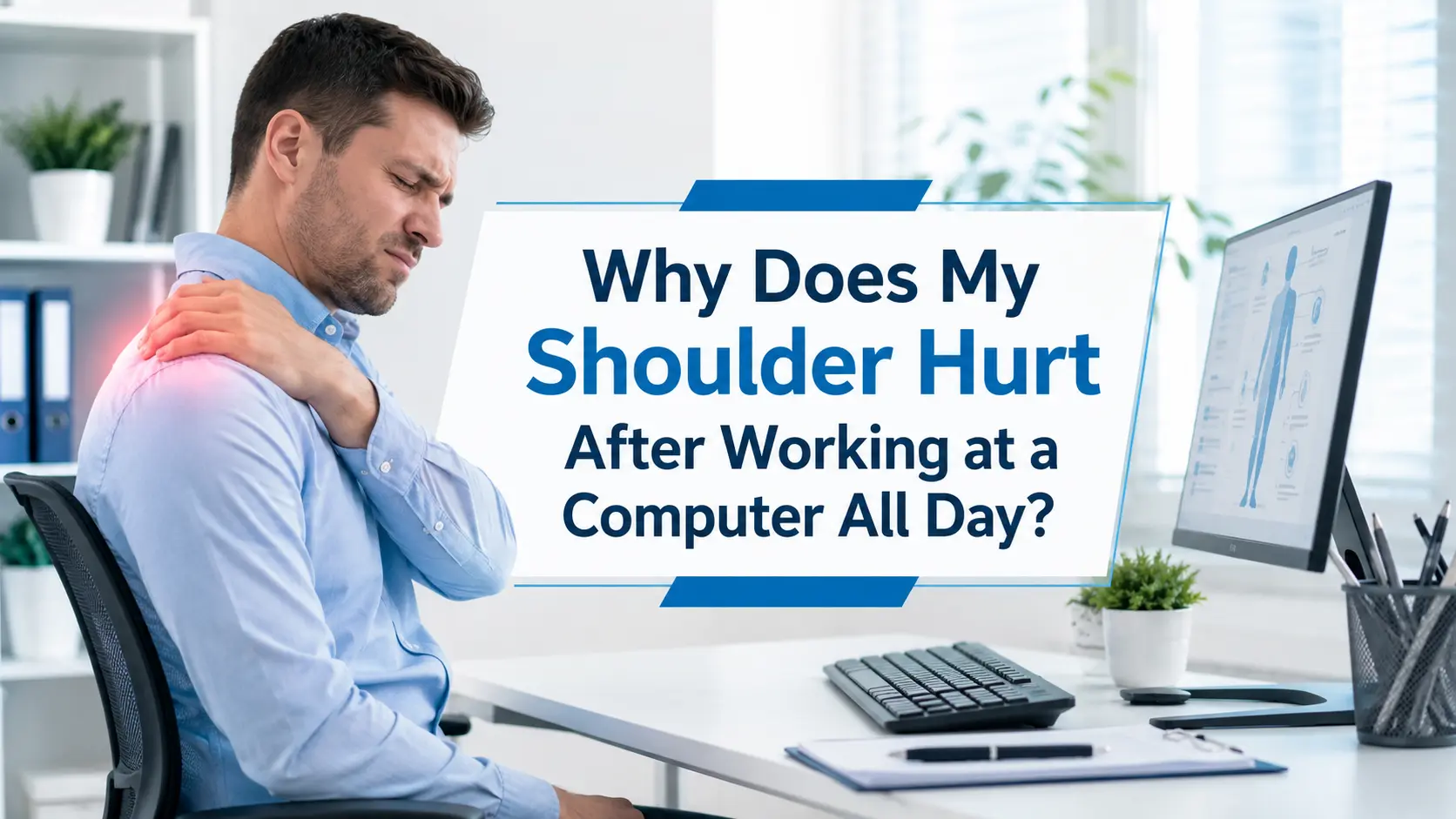
If you sit at a desk for hours and your shoulder starts aching by the end of the day, you are not imagining it. The short answer is this: shoulder pain after computer work is usually caused by a mix of poor posture, muscle overload, reduced shoulder blade movement, tight chest muscles, and repetitive mouse or keyboard use. Over time, that “small” daily strain can irritate the muscles, tendons, and joints around the shoulder.
What makes desk-related shoulder symptoms tricky is that the pain is not always coming from one spot. Sometimes the real issue starts in the upper back, neck, shoulder blade muscles, or rotator cuff, then spreads into the shoulder itself. Chicago Sports & Spine consistently emphasizes a personalized, non-surgical-first approach, with care built around the patient’s specific pain triggers, mobility limits, and goals. Their website also highlights physical therapy, pain management, sports medicine, and targeted treatment plans led by Dr. Baljinder Bathla, who is dual-boarded in Physical Medicine and Rehabilitation and Pain Management.
Research supports what many desk workers feel every day. A systematic review on office workers found that prolonged sitting, forward head posture, and awkward arm positioning are all linked with neck and shoulder symptoms during computer-heavy work. In simple terms, when your monitor is too low, your mouse is too far away, or your shoulders stay slightly shrugged for hours, your body pays for it later.
Why shoulder pain Starts at Your Desk
A computer job may not look physically demanding, but it can be surprisingly hard on the upper body. When you lean toward the screen, round your shoulders, or reach forward with the mouse, your shoulder blade loses its ideal position. That matters because the shoulder does not work well in isolation. It depends on smooth coordination between the neck, upper back, shoulder blade, and rotator cuff.
When that coordination breaks down, a few common problems can happen:
- Upper trapezius overuse from shoulders creeping upward
- Tight pectoral muscles from slouched sitting
- Rotator cuff irritation from poor mechanics
- Shoulder blade weakness that reduces stability
- Referred pain from the neck into the shoulder region
Chicago Sports & Spine’s own content on home-office posture points to practical fixes that make a real difference: keeping the monitor at eye level, using an external keyboard and mouse when needed, sitting back with support, and moving every 30 to 60 minutes. Their shoulder content also reinforces that many cases improve with the right combination of mobility work, strengthening, and guided physical therapy instead of jumping straight to invasive care.
After the first few hours of repetitive desk work, many people notice shoulder pain when reaching overhead, lifting a bag, or lying on one side at night. If symptoms keep coming back and you are searching for shoulder pain chicago solutions, the goal should be more than temporary relief. You want to correct the mechanics that are feeding the problem.
The Most Common Reasons Your Shoulder Hurts After a Full Day at the Computer
Your posture slowly collapses as the day goes on
Few people sit perfectly all day. As you get tired, your head drifts forward, your upper back rounds, and your shoulders roll inward. That changes how the shoulder joint moves and adds extra stress to the surrounding soft tissue. The PMC review on office ergonomics found that long computer hours and forward-flexed posture are major contributors to upper-body musculoskeletal symptoms.
Your mouse arm does more work than you realize
Many desk workers keep one arm slightly lifted and reaching outward for hours. Even when the movement looks minimal, the muscles around the shoulder are working continuously. This low-grade strain can leave the shoulder feeling burning, tight, heavy, or weak by evening.
Your shoulder blade is not moving well
Healthy shoulders depend on good scapular control. If the shoulder blade is stiff or unstable, the rotator cuff has to work harder than it should. Chicago Sports & Spine’s exercise page includes movements like the deltoid stretch, open book stretch, shoulder flexion, banded external rotation, and lateral raise, all of which support better mobility and strength around the shoulder complex.
The rotator cuff gets irritated over time
According to the American Academy of Orthopaedic Surgeons, repetitive stress and repeated shoulder motions can irritate the rotator cuff, leading to pain with lifting, weakness, nighttime discomfort, and difficulty reaching behind your back. You do not need to be an athlete for that to happen. Repetitive daily mechanics can add up, especially when posture is poor.
The pain may actually start in your neck or upper back
This is one reason self-diagnosis is so unreliable. Desk posture often affects the cervical spine, upper traps, levator scapulae, and shoulder blade muscles all at once. What feels like a shoulder problem may partly come from tension or joint irritation above it. Chicago Sports & Spine’s work-from-home guidance makes this point clear: upper-body pain from desk work is often a movement-pattern problem, not just a single sore muscle.
The Signs It Is More Than “Just Sitting Wrong”
Not every desk-related ache is serious, but some symptoms deserve more attention. You should not ignore pain that keeps repeating or starts interfering with sleep and daily life.
Watch for these red flags:
- Pain that lasts for days even after rest
- Night pain when lying on the sore side
- Weakness lifting the arm
- Pain that travels down the arm
- Numbness or tingling
- Major stiffness or loss of range of motion
- Trouble with routine tasks like dressing or reaching overhead
AAOS notes that rotator cuff problems can show up as pain during overhead reach, arm weakness, and pain at night, especially when symptoms build slowly from repetitive use. Chicago Sports & Spine also advises getting evaluated when pain persists, worsens, or starts limiting normal movement. Persistent shoulder pain is a sign that your body may need more than stretches from social media.
What Actually Helps When Your Shoulder Hurts From Desk Work
The best approach is usually a combination of ergonomic correction, movement breaks, mobility work, and strengthening.
Fix the workstation first
Start with the basics:
- Keep the monitor at eye level
- Use a keyboard and mouse that let your elbows stay close to your body
- Avoid reaching forward all day
- Keep your shoulders relaxed instead of shrugged
- Sit back in your chair with support
Chicago Sports & Spine’s posture guidance strongly supports these simple workstation changes because they reduce the constant load placed on the neck and shoulders during long workdays.
Move before the pain builds
One of the biggest mistakes is waiting until you hurt to move. Set a reminder to stand, stretch, or walk every 30 to 60 minutes. Even short movement breaks can reduce muscle fatigue and reset your posture.
Strengthen the muscles that support the shoulder
If the upper back and rotator cuff are weak, the shoulder often becomes the “victim” of bad mechanics. Chicago Sports & Spine’s shoulder exercise page highlights practical movements that support better function, including:
- Deltoid stretch
- Open book stretch
- Shoulder flexion
- No moneys for external rotators
- Lateral raises with control
These are not random exercises. They target the mobility and support systems that desk workers often lose over time.
Get evaluated if the problem keeps returning
Chicago Sports & Spine positions its care around customized treatment plans, conservative care first, and precision-based pain management when needed. That matters because some people simply need posture coaching and exercise progression, while others may have bursitis, impingement, rotator cuff irritation, frozen shoulder, or pain radiating from the neck.
Why Chicago Sports & Spine Is Relevant for This Problem
This blog topic fits directly with the clinic’s service focus. Chicago Sports & Spine emphasizes:
- Sports medicine and pain management
- Physical therapy-based recovery
- Personalized treatment plans
- Non-surgical options before invasive steps
- Experienced, board-certified leadership
- Care for patients at their South Loop location in Chicago
That makes this a natural topic for the brand because desk-related upper-body pain sits right at the intersection of posture, movement dysfunction, repetitive strain, and targeted rehabilitation.
FAQs
1. Why does my shoulder hurt more at night after computer work?
That can happen when repetitive strain during the day irritates the rotator cuff or surrounding tissues. AAOS notes that rotator cuff-related pain often becomes more noticeable when lying on the affected side at night.
2. Can bad desk posture really cause shoulder pain?
Yes. Research on office workers shows that prolonged sitting, forward head posture, and awkward arm positioning can contribute to shoulder and neck symptoms during computer-heavy work.
3. What exercises help desk-related shoulder discomfort?
Chicago Sports & Spine highlights helpful options such as the deltoid stretch, open book stretch, shoulder flexion, no moneys, and lateral raises to improve mobility and strength around the shoulder.
4. When should I see a doctor for shoulder pain from working at a computer?
You should seek professional evaluation if the pain keeps returning, limits your range of motion, causes weakness, radiates down the arm, or interferes with sleep and daily tasks.
Conclusion
If daily computer work is triggering shoulder pain, the issue is usually not one dramatic injury. It is the buildup of poor mechanics, repetitive strain, and too little movement over weeks or months. The good news is that this type of pain often improves when you fix the workstation, move more often, and strengthen the right muscles. If symptoms keep returning, do not guess your way through it.
Ready for a personalized plan? Schedule your appointment with Chicago Sports & Spine and get expert help finding the real cause of your shoulder symptoms.