The short answer: the right treatment depends on what is causing your pain, how long it has lasted, whether it travels into the leg, and how much it limits your daily life.
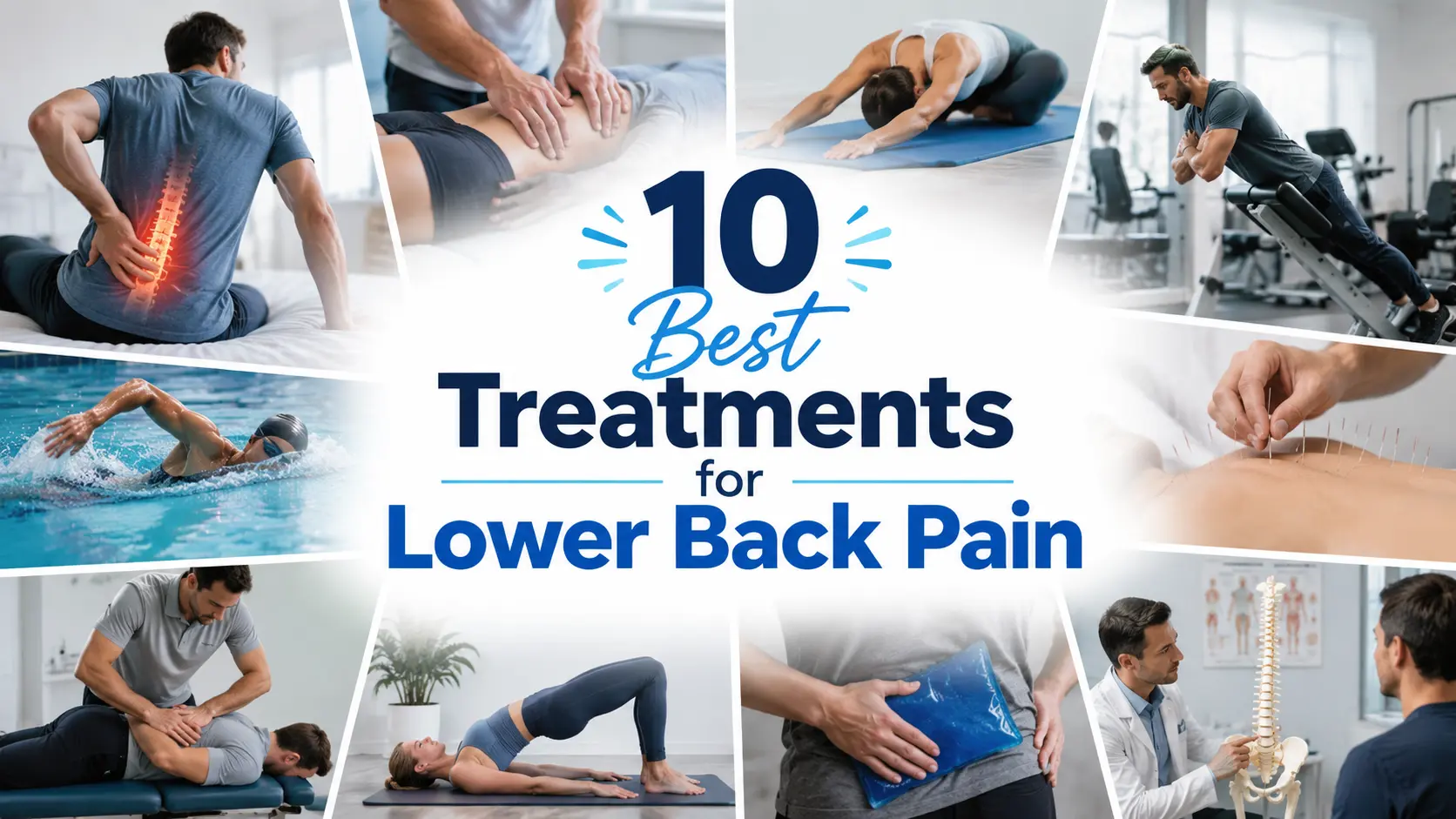
Below are the 10 treatment options that stand out most based on your website’s service content and current evidence-based lower back pain guidance.
1. Physical Therapy That Builds Strength and Movement

Physical therapy remains one of the strongest first-line options for lower back pain. It helps improve core strength, posture, flexibility, endurance, and spinal stability, which can reduce pain and lower the chance of repeat flare-ups. Johns Hopkins describes exercise as the foundation of chronic back pain treatment, and JOSPT guidelines support trunk strengthening, endurance work, aerobic exercise, and movement-control training for both acute and chronic low back pain.
Chicago Sports and Spine also publishes practical low-back exercise guidance, including pelvic tilts, trunk rotations, hamstring stretching, piriformis stretching, and knee-to-chest work. That supports the clinic’s bigger message: movement done correctly is part of recovery, not the enemy of recovery.
2. Chiropractic Care for Alignment, Mobility, and Tension Relief

For patients whose pain is linked to joint restriction, posture strain, or mechanical dysfunction, chiropractic care can be a helpful part of treatment. Chicago Sports and Spine presents chiropractic care as one of its core options for back pain, especially when the goal is to improve movement, reduce tension, and support return to normal activity.
This kind of care tends to work best when it is not used in isolation. JOSPT guidelines support joint mobilization and manual therapy as part of a broader plan, especially when paired with active rehab rather than passive care alone.
3. Targeted Home Exercise Programs That Keep Progress Going

Clinic treatment matters, but what patients do at home matters too. One of the most useful lessons from both your site and external evidence is that consistency beats intensity.
A large review on low back pain found that active strategies such as exercise are associated with less disability, while passive approaches such as bed rest are linked with worse outcomes. It also found that exercise alone may reduce the risk of low back pain by about 33%.
That is why a personalized home program can be one of the most practical treatments for real life. It may include:
- Gentle stretching
- Core activation
- Walking or low-impact cardio
- Posture correction drills
- Mobility work between long periods of sitting
4. Lifestyle Changes That Reduce Daily Stress on the Spine

Sometimes the pain is not caused by one major event. It builds from poor posture, extended sitting, inactivity, repetitive bending, or improper lifting. Chicago Sports and Spine highlights all of these as common contributors to low back pain.
Harvard Health also stresses that lifestyle factors matter: staying active, avoiding prolonged sitting, maintaining a healthy weight, and reducing stress can all support better long-term outcomes.
Simple changes can make a real difference:
- Standing up more often during the workday
- Adjusting desk and driving posture
- Lifting with better mechanics
- Breaking up long car rides
- Returning to regular movement instead of resting too long
5. Acupuncture and Complementary Pain Relief Options

Chicago Sports and Spine’s website makes it clear that care is multidisciplinary, not limited to one treatment path. The clinic specifically mentions acupuncture as part of its broader approach to back pain and chronic pain care.
Johns Hopkins also lists acupuncture among the nonsurgical options that may help some people with chronic back pain. While it is not the right fit for every patient, it can be useful when pain has a muscular, tension-related, or persistent chronic component.
6. Medications Used Carefully and Strategically

Medication can play a role, especially when pain is limiting sleep, movement, or the ability to begin therapy. Chicago Sports and Spine and several medicals discuss medications as one piece of treatment, not the full answer.
Common options may include:
- Over-the-counter anti-inflammatory medicine
- Muscle relaxants
- Nerve-pain medications
- Short-term prescription relief when appropriate
The important point is balance. Hopkins notes that opioids are not recommended as a first-line strategy for chronic back pain and that medication should support a larger plan rather than replace it.
7. Spinal Injections for Inflammation and Radiating Pain

When lower back pain involves nerve irritation, inflammation, sciatica, or spinal stenosis, spinal injections may be an important next step. Chicago Sports and Spine highlights lumbar epidural injections, caudal epidural injections, facet joint injections, medial branch blocks, sacroiliac joint injections, and trigger point injections as part of its interventional pain services.
These procedures are most helpful when used with a purpose. Johns Hopkins explains that injection-based treatments can help reduce pain and improve participation in physical therapy and home exercise, rather than serving as a stand-alone long-term fix.
8. Spinal Decompression and Pressure-Relief Approaches

For some patients, reducing pressure on the discs and nerve structures is a major goal. Chicago Sports and Spine’s back-pain-related pages reference spinal decompression therapy as a treatment option that may be considered in a comprehensive clinic setting.
This approach is especially relevant when symptoms are related to disc compression, radiating leg pain, or mechanical pressure patterns. It is not for everyone, but in the right case, it can fit well into a non-surgical treatment plan designed around function and pain reduction.
9. Radiofrequency Ablation and Advanced Interventional Care

When back pain keeps returning and is clearly linked to certain spinal joints or nerves, more advanced interventional treatment may be appropriate. Chicago Sports and Spine specifically lists lumbar radiofrequency ablation among its services for pain management.
Their own content also describes a wider interventional philosophy: use targeted, minimally invasive procedures when conservative care alone has not provided enough relief, while still staying focused on long-term function.
10. Surgery Only When Conservative Care Is Not Enough

Surgery has a role, but it is usually not the first answer. Chicago Sports and Spine’s website consistently positions care as non-surgical first, and Hopkins makes a similar point: surgery is generally considered only after reasonable conservative treatment has been tried, or when there are serious neurologic warning signs.
That is an important message for patients. Lower back pain can feel urgent, but not every severe symptom means surgery is the next step. Often, the best results come from starting with the least invasive, most targeted plan and escalating only when necessary.
When Lower Back Pain Should Not Be Ignored
Some symptoms deserve prompt medical attention, especially if pain is paired with:
- New weakness in the leg
- Numbness that is getting worse
- Trouble with balance or walking
- New bowel or bladder changes
- Severe pain after a fall or injury
- Pain that keeps worsening despite rest and conservative care
These warning signs appear in evidence-based back pain guidance and should not be brushed off.
What Makes a Good Treatment Plan More Likely to Work
The strongest lower back pain plans usually have a few things in common:
- A clear diagnosis
- A mix of symptom relief and root-cause treatment
- Active rehab, not passive care only
- Follow-up and adjustment over time
- Realistic goals for work, exercise, sleep, and daily movement
In real life, the best treatment for back pain is the one that fits the patient in front of you, not the one copied from someone else’s symptoms. That is exactly why Chicago Sports and Spine emphasizes individualized care, board-certified expertise, and a step-by-step process from consultation through follow-up.
FAQs
1. What is the best treatment for back pain if the pain started recently?
If the pain is new and not tied to a major red flag symptom, the best starting point is usually evaluation, activity modification, and guided exercise or physical therapy. Many cases improve more with smart movement and early conservative care than with complete rest.
2. Can physical therapy really help lower back pain?
Yes. Physical therapy is one of the most evidence-supported treatments for lower back pain because it helps improve strength, flexibility, posture, and movement control. It is especially valuable when paired with a home program and follow-up.
3. When are injections used for lower back pain?
Injections are often considered when pain involves nerve irritation, inflammation, sciatica, spinal stenosis, or persistent pain that is limiting rehab progress. They are usually most effective as part of a broader treatment plan, not as the only treatment.
4. When should I see a specialist for lower back pain?
You should consider specialist care if the pain lasts more than a few weeks, keeps returning, travels into the leg, limits normal activity, or includes numbness, weakness, or other neurologic symptoms. A proper diagnosis helps match treatment to the actual pain.
Conclusion
Lower back pain is common, but living around it every day should not become normal. The most effective care usually combines accurate diagnosis, active rehabilitation, targeted pain relief, and a personalized plan that matches the real cause of symptoms. Whether the issue is muscle strain, sciatica, disc irritation, or chronic spinal pain, early and well-guided treatment can make a major difference in how fast and how fully you recover.
If you want a personalized, non-surgical-first plan for lower back pain, connect with Chicago Sports and Spine to explore the right next step for your symptoms.