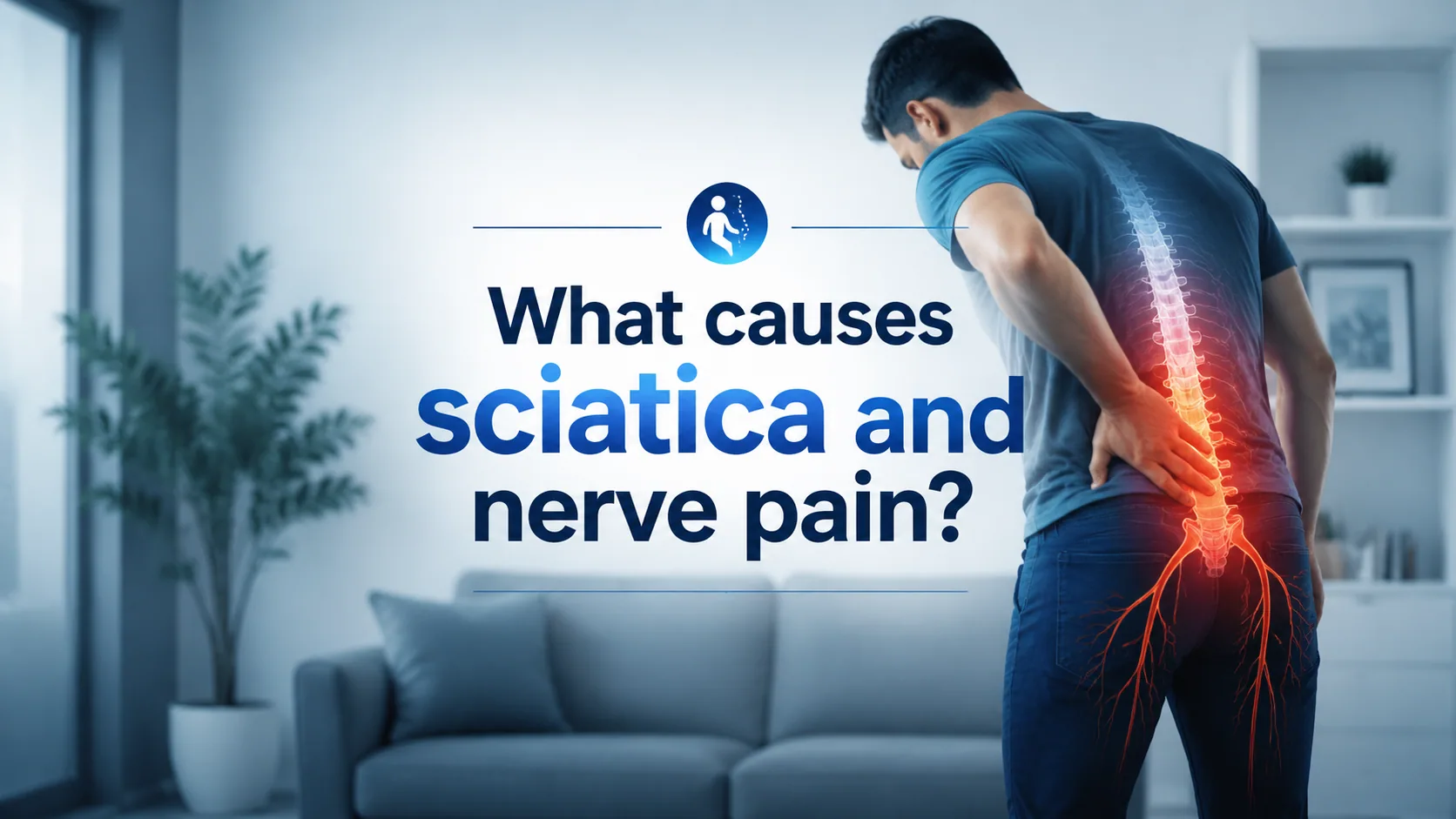
When back pain starts in the lower back and shoots into the buttock, thigh, or calf, it is often a sign that a nerve is irritated, inflamed, or compressed. In many cases, sciatica happens when a lumbar nerve root is affected by a herniated disc, spinal narrowing, arthritic changes, or tight muscles around the hip and pelvis. The pain can feel sharp, burning, electric, or deep and aching. It may also come with tingling, numbness, or weakness. The most important step is finding the true source of the nerve irritation so treatment can target the cause, not just the symptoms.
Why Sciatica Feels Different From Ordinary back pain
Sciatica is not a separate disease. It is a symptom pattern that usually points to irritation of the nerves that travel from the lower spine into the leg. Unlike routine muscle soreness, sciatica often follows a path. The pain may begin in the low back, move into the buttock, and continue down the back or side of the leg.
What makes sciatic pain stand out is the way it behaves:
- Radiating pain that travels below the knee
- Burning or electric sensations instead of simple soreness
- Numbness or tingling in the leg or foot
- Muscle weakness that makes walking or standing harder
- Worsening symptoms with sitting, coughing, sneezing, bending, or twisting
That pattern matters because not every sore back involves a nerve, but sciatica often does.
The Most Common Causes of Sciatica and Nerve Pain
Several conditions can place pressure on the sciatic nerve or the nerve roots that form it.
Herniated Disc
A herniated disc is one of the most common causes of sciatica. The soft inner portion of a spinal disc can push outward and irritate a nearby nerve root. When that happens, pain may shoot down one leg and may be accompanied by tingling or weakness.
Spinal Stenosis
Spinal stenosis means the spaces in the spine have narrowed. That narrowing can crowd the nerves and create pain, heaviness, numbness, or weakness, especially during walking or standing for long periods.
Bone Spurs and Spinal Arthritis
As the spine ages, joints can become inflamed and arthritic. Bone spurs may develop and reduce the space around the nerves. This can lead to nerve irritation that feels very different from a basic muscle strain.
Spondylolisthesis
This happens when one vertebra slips slightly out of position over another. That shift can create instability and pressure on spinal nerves, leading to low back discomfort with radiating leg pain.
Piriformis Syndrome
Sometimes the problem is not only in the spine. The piriformis muscle in the buttock can become tight or inflamed and place pressure on the sciatic nerve. This may cause pain in the buttock and symptoms traveling down the leg.
Muscle Strain and Poor Movement Mechanics
Not every case of sciatica starts with a major injury. Repeated bending, twisting, lifting, poor posture, prolonged sitting, and weak core support can overload the lower spine over time. That stress can contribute to disc irritation, joint inflammation, and nerve sensitivity.
Less Common but Important Causes
A thorough medical evaluation is especially important when symptoms are severe or unusual because nerve pain can sometimes be linked to:
- Fractures
- Inflammation
- Infections
- Tumors
- Pregnancy-related pressure changes
- Complications after trauma or surgery
Symptoms That Suggest a Nerve Is Involved
Nerve pain usually has a recognizable pattern. If symptoms go beyond simple soreness, it may be time to look deeper.
Watch for these signs:
- Pain that travels from the low back into the buttock or leg
- Pins and needles in the calf, foot, or toes
- Burning or shocking pain with movement
- Weakness when lifting the foot or climbing stairs
- One-sided symptoms that affect only the right or left leg
- Pain that increases with sitting or long car rides
These symptoms can overlap with disc injuries, spinal stenosis, piriformis syndrome, and other causes of nerve compression.
What Raises the Risk of Sciatica?
Not every case develops for the same reason, but some patterns increase the odds of nerve irritation and back pain.
Common risk factors include:
- Poor posture
- Improper ergonomics
- Long hours of sitting
- Repeated bending, twisting, or lifting
- Inactivity and deconditioning
- Excess body weight
- Aging-related spinal wear
- Jobs that involve vibration, driving, or physical strain
- Previous back injuries
For many people, symptoms build gradually. What starts as stiffness or soreness can turn into nerve pain when the underlying issue is left unaddressed.
When Sciatica Should Not Be Ignored
Many cases improve with conservative care, but some symptoms should never be brushed aside.
You should seek medical attention sooner if you have:
- Pain lasting more than a week or worsening
- Increasing numbness or weakness
- Difficulty walking normally
- Pain after a fall, accident, or sudden injury
- Loss of bowel or bladder control
- Severe leg weakness or foot drop
If you are looking for a back pain specialist in Chicago because your symptoms are persistent, radiating, or interfering with daily life, getting evaluated early can help prevent the problem from becoming more limiting.
What Usually Helps Calm Sciatica and Nerve Pain
The best treatment depends on the cause. That is why diagnosis matters. A sore muscle, a disc problem, and spinal stenosis can all feel similar at first, but they do not respond to the exact same approach.
Common non-surgical strategies may include:
- Activity modification instead of complete bed rest
- Targeted physical therapy to improve posture, flexibility, and core support
- Heat or ice for short-term symptom control
- Anti-inflammatory care when appropriate
- Stretching and guided movement to reduce nerve tension
- Interventional pain treatments when inflammation or nerve compression is significant
- Personalized care plans based on imaging, exam findings, and symptom pattern
The goal should always be long-term relief by addressing the source of the problem, not simply covering it up for a few hours.
Why a Proper Diagnosis Matters
Sciatica is really a signal. It tells you something is irritating a nerve, but it does not tell you exactly what that something is. That is where a careful history, physical exam, and when needed, imaging or nerve testing become important.
A proper diagnosis helps answer questions like:
- Is the pain coming from a disc, joint, muscle, or nerve root?
- Is it mechanical strain or true nerve compression?
- Is the issue likely to improve with conservative care?
- Are there red flags that require urgent treatment?
For people searching online for Low back pain chicago answers, this is often the missing step. The symptoms may feel familiar, but the cause can still be very different from person to person.
FAQs
Is sciatica always caused by a herniated disc?
No. A herniated disc is a common cause, but it is not the only one. Sciatica can also be caused by spinal stenosis, bone spurs, spinal arthritis, spondylolisthesis, piriformis syndrome, or other conditions that irritate the nerve.
Can muscle tightness cause sciatic nerve pain?
Yes. Tight or inflamed muscles, especially around the buttock and hip, can irritate or compress the sciatic nerve. Piriformis syndrome is one example where muscle-related pressure can create symptoms similar to disc-related sciatica.
When is sciatica considered an emergency?
Seek urgent medical attention if you develop sudden leg weakness, loss of bowel or bladder control, numbness that is rapidly worsening, or severe pain after a major injury. These can be signs of serious nerve involvement.
Will sciatica go away on its own?
Some cases improve within days or weeks, especially when inflammation settles and the cause is mild. But if symptoms keep returning, last too long, or include weakness or numbness, a medical evaluation is the smarter next step.
Conclusion
Sciatica and nerve pain usually begin when a nerve in the lower back becomes irritated by a disc problem, spinal narrowing, arthritis, muscle tension, or structural instability. Because the symptoms can travel, burn, tingle, or weaken the leg, they often feel very different from typical back pain. The key is not guessing. The key is identifying the real cause early and choosing the right treatment plan for lasting relief.
If sciatic pain, tingling, numbness, or leg weakness is disrupting your day, schedule an evaluation with Chicago Sports and Spine and get a personalized plan focused on the source of your pain.